
The Collapse of Ngawang Topche
The ClimbThis flow follows Ngawang Topche Sherpa’s altitude illness, the rescue effort, and the consequences for the expedition.
increasing Bearing strength in each event
 decreasing
Bearing strength in each eventdecreasingA Strong Sherpa Worker
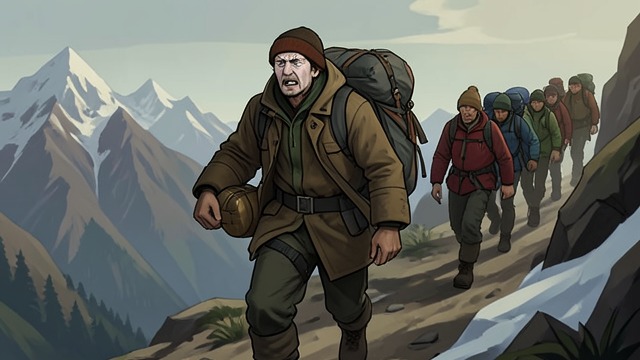
A Strong Sherpa Worker
Expedition Labor
Ngawang Topche Sherpa works on the mountain as a high-altitude support climber, carrying loads and helping establish camps.
Hidden Exposure
The work places him repeatedly in the thin air and physical strain that can trigger severe altitude illness.
Confusion at Camp II
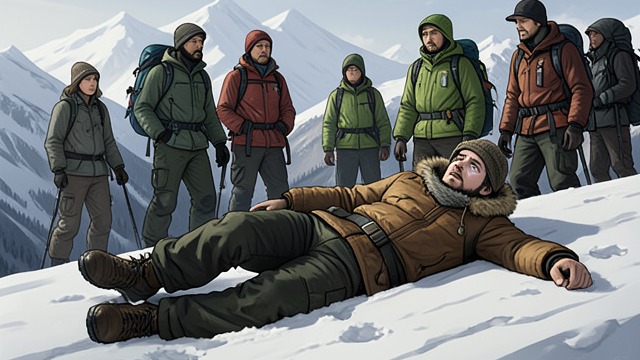
Confusion at Camp II
Symptoms
Scott Fischer encounters Ngawang Topche Sherpa disoriented and coughing, then tells him to descend.
Continued Ascent
The Sherpa does not follow the order and is later found severely ill, showing how confusion can defeat ordinary instructions at altitude.
A Difficult Descent
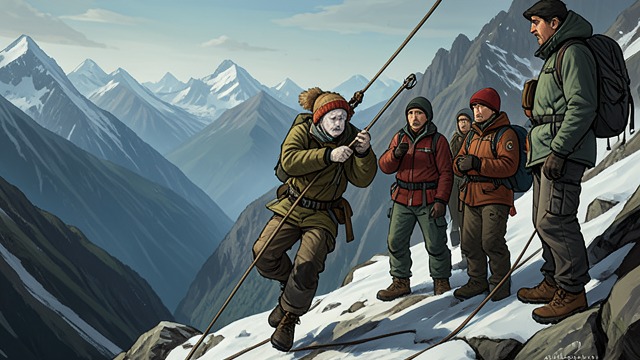
A Difficult Descent
Emergency Response
Klev Schoening and Tim Madsen help lower Ngawang Topche Sherpa, while Neal Beidleman and other Sherpas join the effort.
Limits of Treatment
Oxygen and medical measures do not reverse his condition; the team recognizes that rapid descent is essential but arduous.
Hospital and Coma
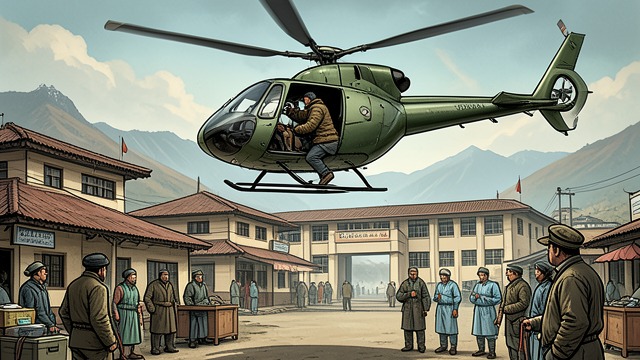
Hospital and Coma
Evacuation
Ngawang Topche Sherpa is taken by helicopter to a hospital in Kathmandu after his condition worsens.
Lasting Consequence
He lapses into a coma and suffers brain damage, adding emotional and financial pressure to an already strained expedition.
A Fatal Outcome
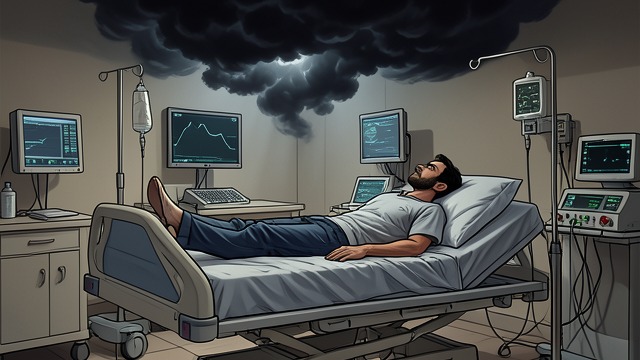
A Fatal Outcome
Loss
Despite evacuation and treatment, Ngawang Topche Sherpa dies in the month after his collapse.
Expedition Cost
His death makes clear that the expedition’s danger is borne not only by paying clients but also by the Sherpas whose work sustains them.
March and April 1996
April 22, 1996
April 22–23, 1996
late April 1996 in Kathmandu
May 1996
